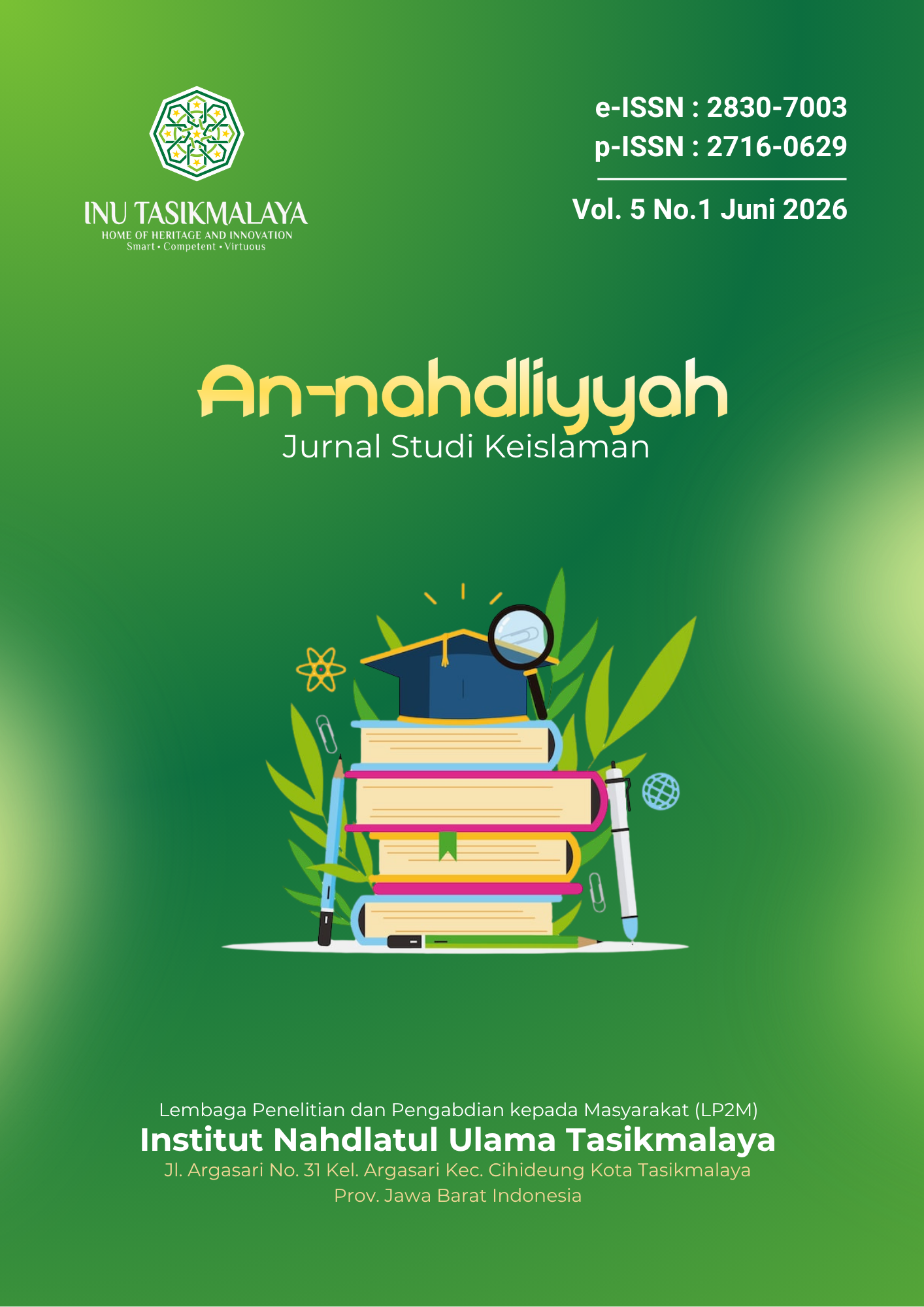
Task And Time Management From An Islamic Perspective
DOI:
https://doi.org/10.70502/ajsk.v5i1%20Juni.256Keywords:
time management, amanah, itqan, tawazun, Qur'anic valuesAbstract
The purpose of this study is to explore the use of the qualitative library research method to investigate task and time management within the context of an Islamic worldview. The primary source of data for this investigation is the Holy Qur'an, and classical and contemporary interpretations of the Qur'an are utilized as secondary sources. A thematic analysis (maudhu'i) was conducted to find out what themes exist in relation to time management. Subsequently, a qualitative analysis was used to determine the relationships between each theme. There were six major themes that arose out of the analysis: Amanah (Trustworthiness/Responsibility), Discipline/Punctuality, Itqan (Professionalism), Tawazun (Balance), Muhasabah (Self-Reflection/Evaluation), and Sabr (Perseverance/Patience). The themes also define time as a moral and spiritual responsibility that affects how effectively individuals perform their jobs, worship God, fulfil societal responsibilities, and grow as individuals. Results from the analysis suggest that the six themes can be used to create everyday practical routines. This paper adds to existing research by providing a conceptual model that links Qur'anic ethical values with current task and time management concepts. It also acknowledges that the findings of this study are limited due to its qualitative nature and reliance on literature-based sources.
Downloads
References
Aeon, B., Faber, A., & Panaccio, A. (2021). Does time management work? A meta-analysis. PLOS ONE, 16(1), e0245066. https://doi.org/10.1371/journal.pone.0245066
Amin, A., & Alimni, A. (2021). Intensitas media sosial dan pengaruhnya terhadap hasil belajar agama Islam siswa sekolah menengah pertama Kota Bengkulu. [Publication details should be verified and completed before submission].
Ardiansa, P. R., & Putra, S. (2024). Analisis manajemen waktu pada Surat Al Ashr dalam Tafsir Al Qur'an Al Adzim karya Ibnu Katsir. Jurnal Ilmiah dan Karya Mahasiswa, 2(2), 161–168.
Arifin, Z. (2022). Pengelolaan waktu dalam perspektif pendidikan Islam. Tazkiya: Jurnal Pendidikan Islam, 11(1), 29–43.
Armi, Z. A., Efendi, A. A. A., Silaban, H. R., & Batubara, M. N. (2025). Menjaga amanah dalam Al-Qur'an: Solusi atas kasus korupsi. Al-Qadim: Jurnal Tafsir dan Ilmu Tafsir, 2(1), 44–55.
Aulia, M. H., & Surahman, C. (2025). Konsep manajemen waktu dalam tafsir maudhu'i: Relevansi terhadap pendidikan Islam. Kreatifitas Jurnal Ilmiah Pendidikan Islam, 14(1), 19–36.
Biedermann, D., Schneider, J., & Drachsler, H. (2021). Digital self-control interventions for distracting media multitasking: A systematic review. Journal of Computer Assisted Learning, 37(5), 1217-1231. https://doi.org/10.1111/jcal.12581
Dasuki, A., Hidayat, R., Arpijayanti, S. M., & El Bilad, C. Z. (2025). Social alienation in the digital age: Roland Barthes' semiotic analysis of the meaning of ghaflah in QS. Al-A'raf verse 205. Medina-Te: Jurnal Studi Islam, 21(3), 224–231. [Author list should be verified against the original publication].
Fuadi, A. R. (2024). Muhasabah diri dalam Al-Quran menurut Syaikh Abdul Qadir Al-Jailani. Universitas Yudharta. [Document type and publication details should be verified].
Hermawan, I., Ahmad, N., & Suhartini, A. (2020). Konsep amanah dalam perspektif pendidikan Islam. QALAMUNA: Jurnal Pendidikan, Sosial, dan Agama, 12(2), 141–152.
Maharani, F., Muhammad, M., & Anggarini, D. R. (2024). Pengaruh motivasi kerja, manajemen waktu dan stres kerja terhadap kinerja pekerja paruh waktu yang berstatus mahasiswa di Bandar Lampung. Jurnal Manajemen dan Organisasi, 15(2), 176–185.
Mauludah, A. Z., Ma'sum, T., & Iswanto, J. (2023). Konsep kepemimpinan pendidikan Islam perspektif Muhammad Quraish Shihab dalam Tafsir Al-Mishbah. JIIP: Jurnal Ilmiah Ilmu Pendidikan, 6(11), 9495–9501.
Muhammad, A. N., & Anggraini, R. (2025). Fasting in digital era: The relevance of Sufism in facing contemporary spiritual challenges. NALAR: Jurnal Peradaban dan Pemikiran Islam, 9(1), 78–98.
Mujahidin, E., Rachmat, R., Tamam, A. M., & Alim, A. (2022). Konsep manajemen waktu dalam perspektif pendidikan Islam. Edukasi Islami: Jurnal Pendidikan Islam, 11(1), 129–146. [Author list should be verified against the original publication].
Rahman, A., & Taufik, M. (2024). Menggali dilema etis: Penggunaan teknologi komunikasi digital generasi muda dalam perspektif Islam. Al-Maqrizi: Jurnal Ekonomi Syariah dan Studi Islam, 2(1), 28–38.
Sakinah, Y., & Hasan, I. (2024). Manajemen waktu program pembelajaran tahfidz Al-Quran di Pondok Pesantren Tahfidz Maskanul Huffadz Medan. EDUKASIA Jurnal Pendidikan dan Pembelajaran, 5(1), 1763–1772.
Steel, P. (2007). The nature of procrastination: A meta-analytic and theoretical review of quintessential self-regulatory failure. Psychological Bulletin, 133(1), 65-94. https://doi.org/10.1037/0033-2909.133.1.65
Downloads
Published
How to Cite
Issue
Section
License
Copyright (c) 2026 Yanto Maulana Restu (Author); Dede Rahman Dede Rahman, Jaen Mubarok, Maesaroh, Risma Awalia (Author)

This work is licensed under a Creative Commons Attribution-ShareAlike 4.0 International License.